Padel rules in pictures
Your first match, one picture at a time.
The court
Glass, mesh and a net. 20 × 10 m.
More
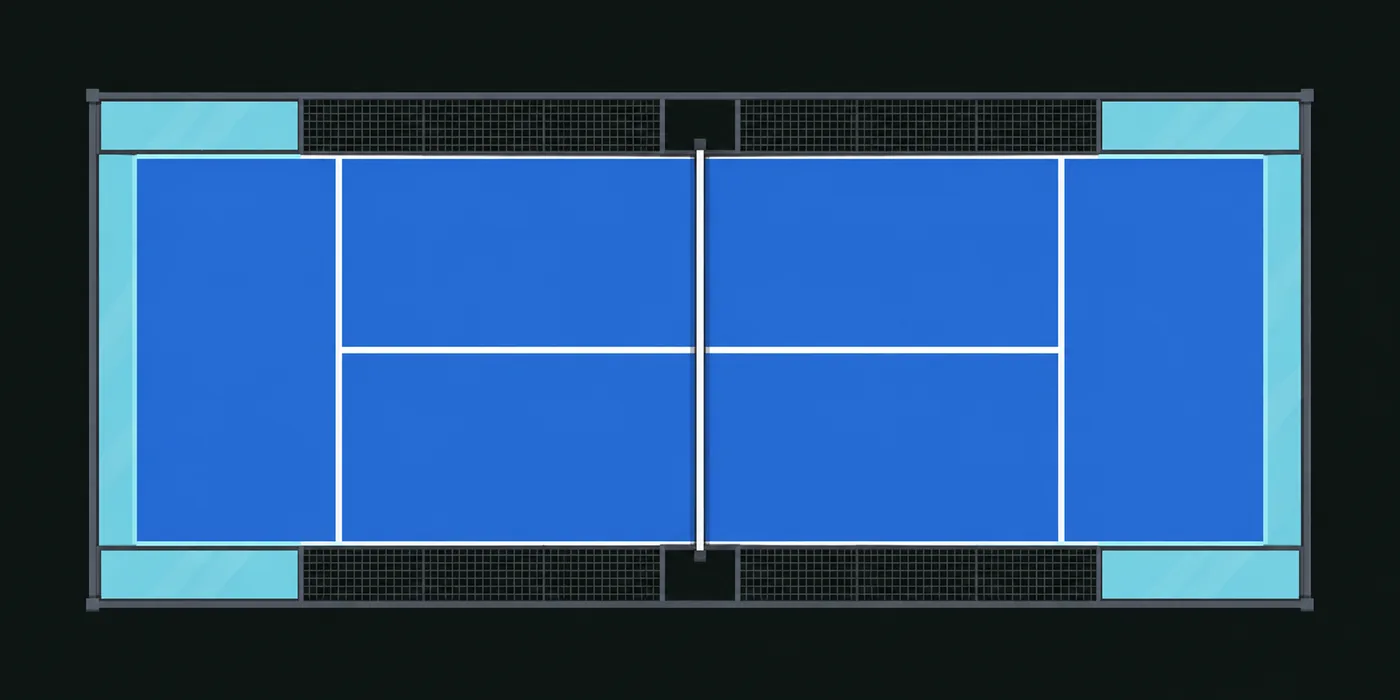
A box of glass and mesh, 20 by 10 metres, split by a net. The walls are part of the game.
- 20 × 10 m: playing area
- 88 cm: net height in the middle, 92 cm at the posts
- 6.95 m: from the net to the service line
- 3 m + 1 m: back wall: glass, then mesh on top
The serve
Bounce, hit below the waist, cross the court.
 Land here
 Serve from here
- 2×tries
- Letnet, then in: replay
More
Bounce the ball, hit it at or below the waist, and send it diagonally into the opposite box.
- Stand behind the service line, between the centre line and the side wall, and bounce the ball there.
- Hit it at or below the waist, with at least one foot on the ground.
- It must land in the diagonal box. A ball on the line is in.
- Two tries. After the bounce the ball may touch the glass; if it touches the mesh, it is a fault.
- The serve touches the net and lands in: play it again. The receiver must let the serve bounce.
The dashed line is the waist. Contact must be at or below it. The first point of a game is served from the right, then sides alternate every point.
The walls
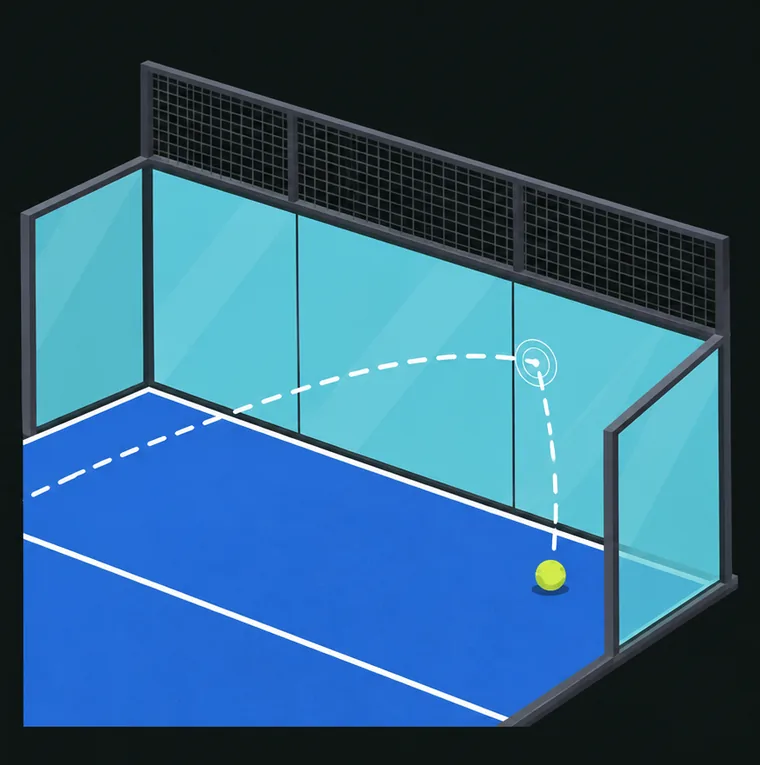
Floor first, then the walls.
More
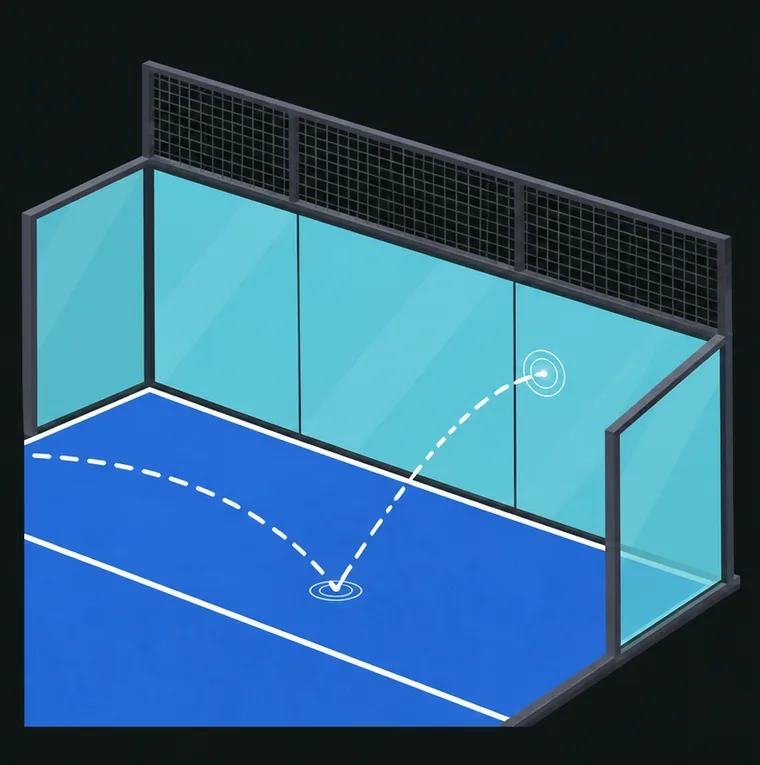
The ball must bounce on the floor before it touches the other side's walls. After that, the walls keep it in play. One bounce, off the back glass, back over the net.
Floor first, then glass: play it before the second bounce. Into the glass with no bounce: the player who hit it loses the point.
- You may play the ball after it comes off any wall, as long as it has bounced on the floor only once.
- You may hit the ball into your own glass to send it over the net.
- Your shot touches the mesh or the floor on your own side: point lost.
- The ball touches you or your partner, or you touch the net: point lost.
- Volleys are allowed. Only the return of serve must bounce first.
- After a good bounce the ball leaves the court: point to the player who hit it. Where play outside the court is allowed, you may run out and return it.
Points and games
0, 15, 30, 40, game.
ServingPointsTap the winning sideGamesMore
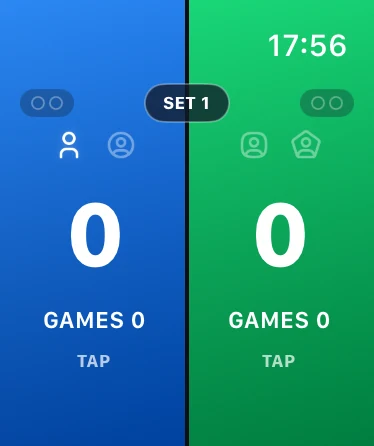
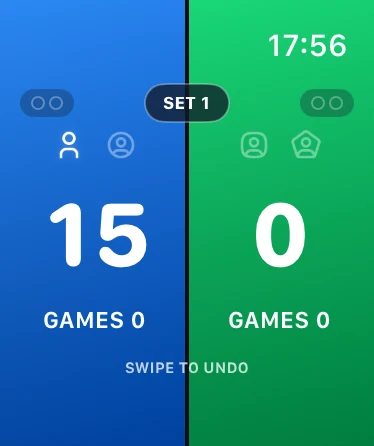
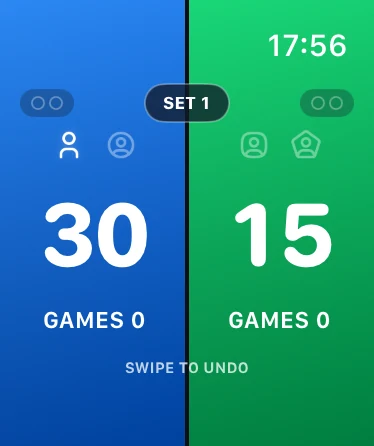
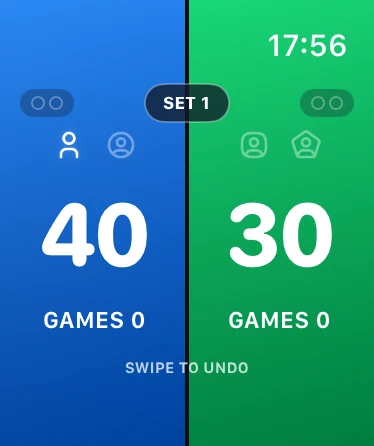
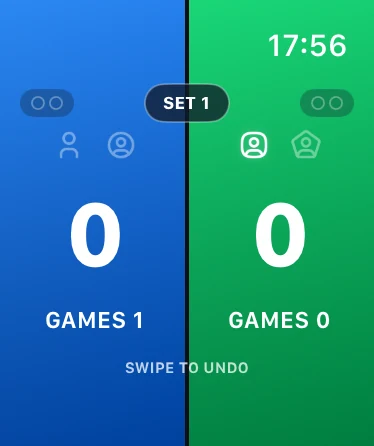
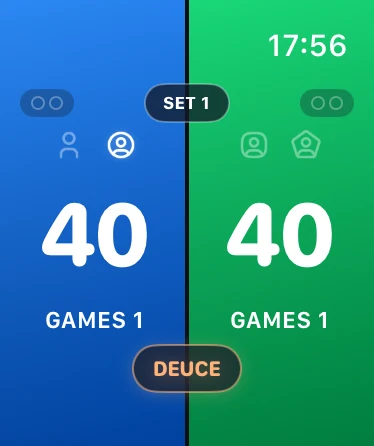
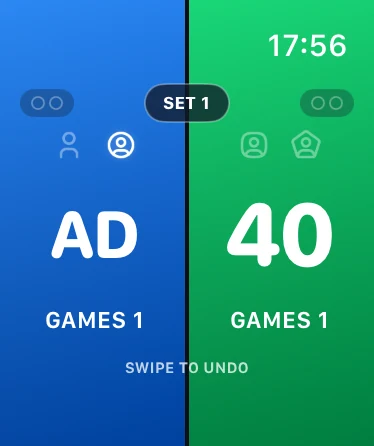
Points go 0, 15, 30, 40, game. At 40-40 the format decides how the game ends. Real Rallyboard screens: tap the half of the side that won the rally, swipe right to undo.
At 40-40: three ways to finish a game
Pick one before the match.
Advantage
Golden point
Star Point
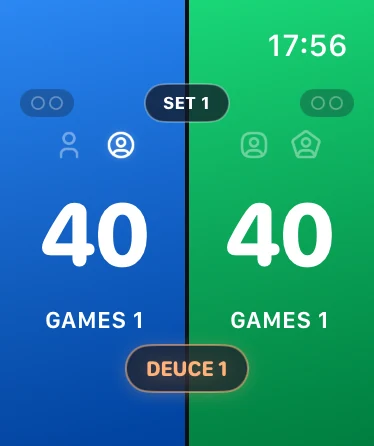
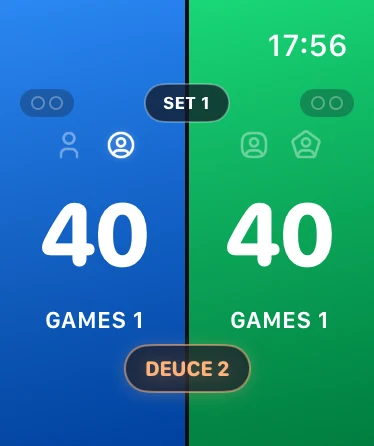
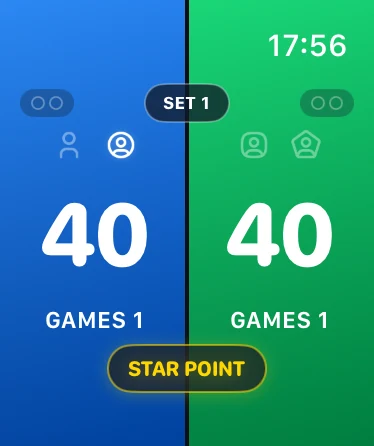
More
40-40 is called deuce. The FIP rules allow three ways to settle it. Agree on one before the match.
- Advantage: Win the point at deuce for advantage, win the next one for the game. Lose it and it is deuce again, with no limit.
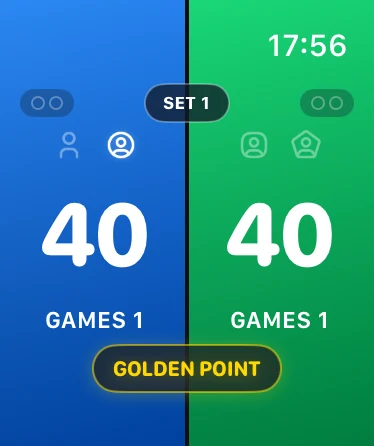
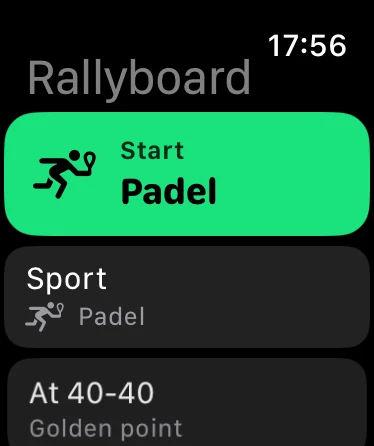
- Golden point: One deciding point at the first deuce. The receiving pair chooses which player receives it.
- Star Point: Up to two advantages. At the third deuce one point decides the game. Used on the FIP circuits from 2026.
The watch names the moment at 40-40, so nobody has to remember which deuce it is. Step by step: how the Star Point works.
Sets, tiebreak and match
6 games, 2 clear. Best of 3.
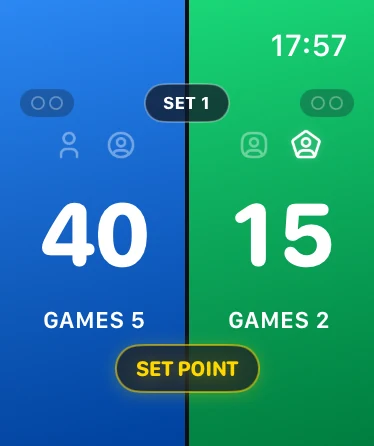
More
Six games win a set with a two-game lead. A match is best of three sets.
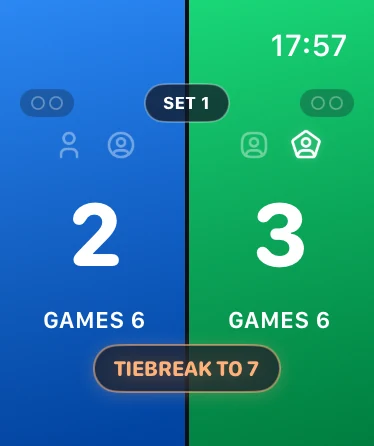
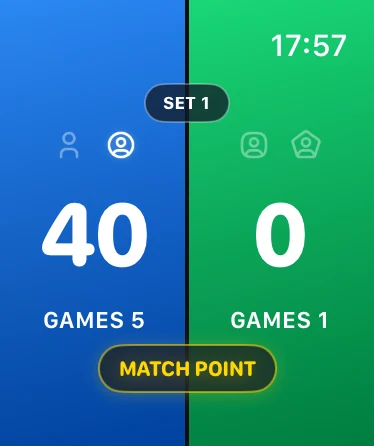
- Set: First to 6 games, 2 clear: 6-4, 7-5. Here the blue side leads 5-2 at 40-15: set point.
- Tiebreak: At 6-6 points count 1, 2, 3. First to 7 with a two-point lead wins the set 7-6.
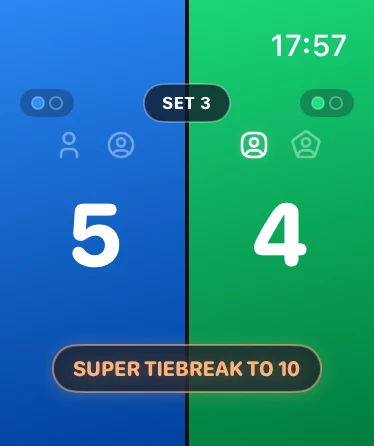
- Super tiebreak: Many events replace a third set with one tiebreak to 10, with a two-point lead.
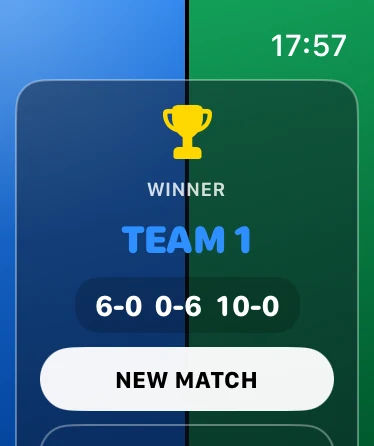
- Match point: One point from the match. When it ends, the watch lists the score of every set.
Who serves
One server per game, in turns.
A1A2B1B2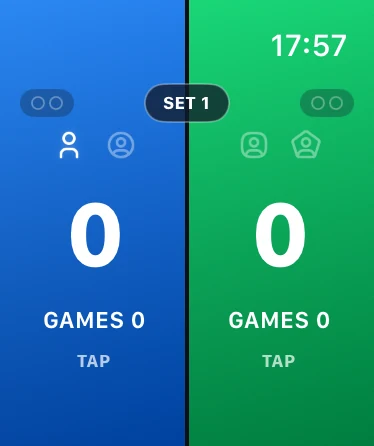
More
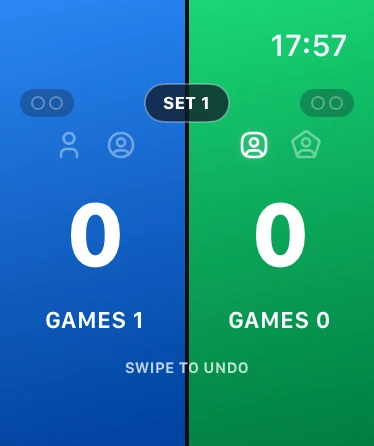
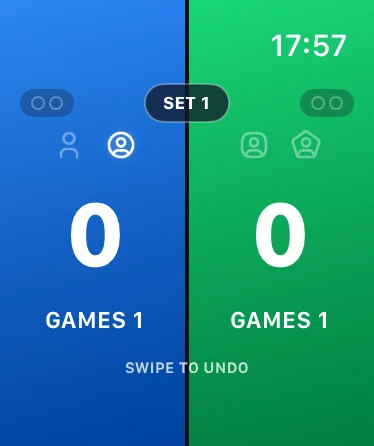
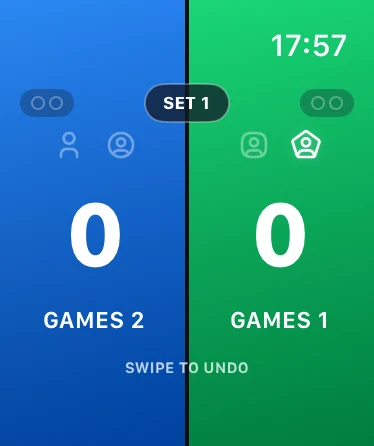
One player serves a whole game. The serve passes to the other pair after each game, and partners take turns. A1, B1, A2, B2, then again. On the watch the brighter player icon is the server.
- Before each set, each pair decides who serves first. That order stays for the whole set.
- In a tiebreak: one serve, then two each, the first one from the right.
- Change ends after games 1, 3, 5 and every odd game; in a tiebreak, every 6 points.
Ways to play
Fixed pairs, or partners that rotate.
More
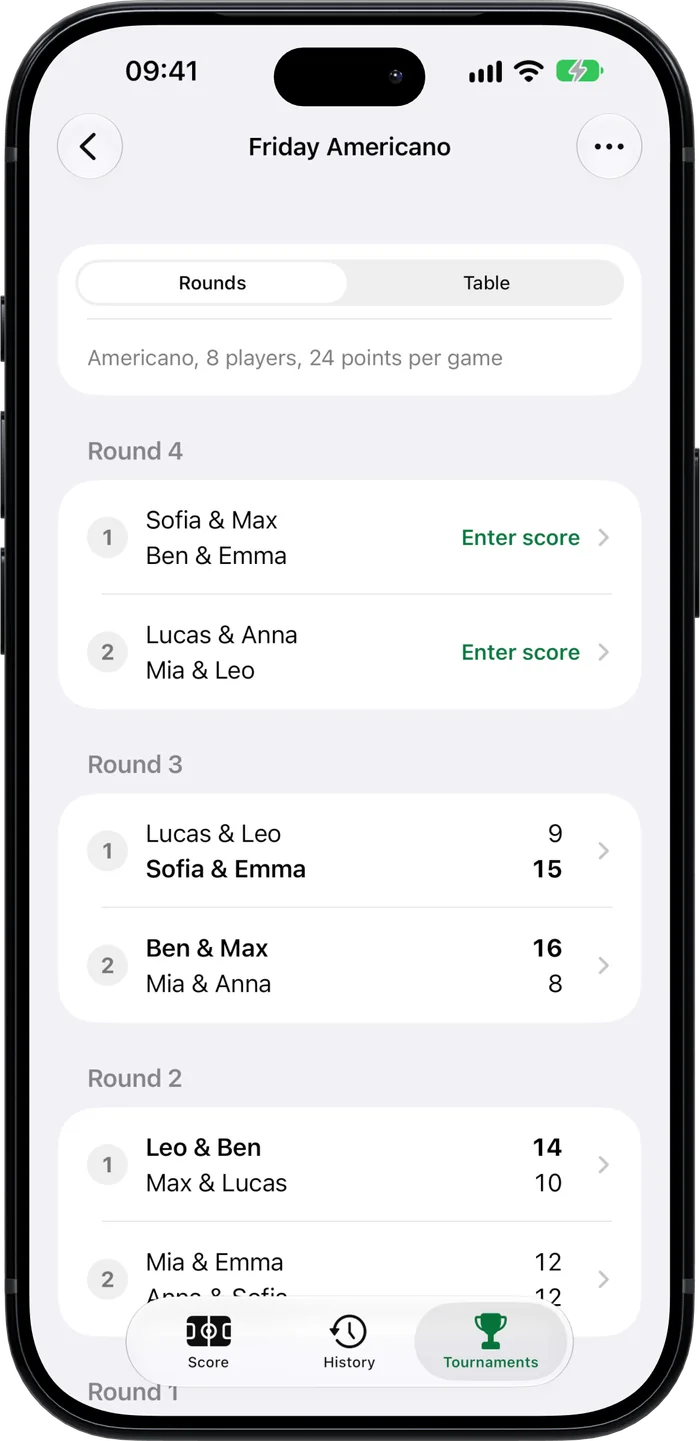
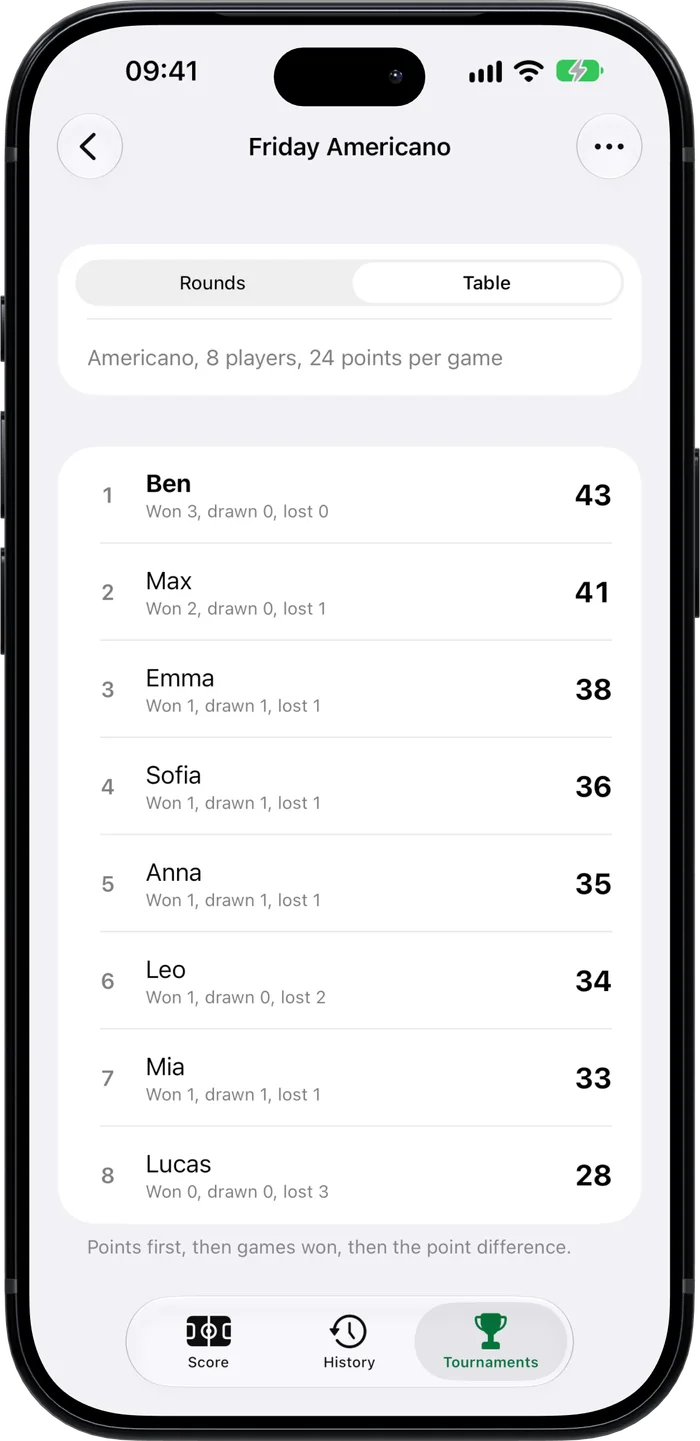
A match is one format. At clubs people also play social formats where partners change.
- Match: Two fixed pairs, games and sets as above. This is what Rallyboard counts.
- Americano: Partners change every round. Each match is played to a set number of points, often 16, 24 or 32. Every rally is a point, each player keeps the points of their side, and the most points at the end wins.
- Mexicano: Scored like Americano, but after each round players are ranked by points. On each court the 1st and 4th usually play the 2nd and 3rd, so matches stay close.
Quick answers
What are the basic rules of padel?
Padel is played in pairs on a 20 × 10 m court closed by glass and mesh. The serve is hit at or below the waist after a bounce, diagonally into the opposite box. The ball must bounce once on the other side before it touches their walls, and can then be played off the walls. Scoring is 15, 30, 40, game; six games with a two-game lead win a set; a match is best of three sets.
Can the ball hit the wall in padel?
Yes, after it has bounced on the floor. A ball that hits the other side's glass or mesh before bouncing loses the point. You may also play the ball into your own glass to send it over the net, but not into your own mesh.
What happens at 40-40 in padel?
It is deuce. Depending on the format, the game is decided by advantage, by the golden point (one deciding point at the first deuce) or by the Star Point (up to two advantages, then one deciding point at the third deuce).
How does the serve work in padel?
Bounce the ball behind your service line and hit it at or below the waist, diagonally into the opposite box. You have two tries. A serve that bounces in the box and then touches the mesh is a fault; touching the glass is fine. A serve that touches the net and lands in is played again.
What is the difference between Americano and Mexicano?
Both are social formats where partners change and each match is played to a set number of points. In Americano partners rotate on a fixed schedule; in Mexicano the pairs of the next round are made from the current standings.
Sources
FIP Rules of Padel, applied from 1 January 2026: the court, the serve (rules 6 to 9), play (rules 12 to 16) and the score (rule 1).
Americano and Mexicano are not in the FIP rules. Clubs and apps describe them, for example Padel.FYI and FenixPlay; details vary from club to club.
More detail: padel scoring explained and the Star Point rule.